I have a philosophy that can be stated in 7 words:
You can always give them more books.
There is no shortage of books around here, but books aren’t of any use if your child can’t read them. As a Lifestyle of Learning mom, I am a firm believer in having good books readily available for your children to dig into to whether they can read or not, but there is a practical side to this as well. Somewhere along the line, the child has to learn to read. Once that happens, then my philosophy knows no bounds!
So, how can you teach your child to read natural way?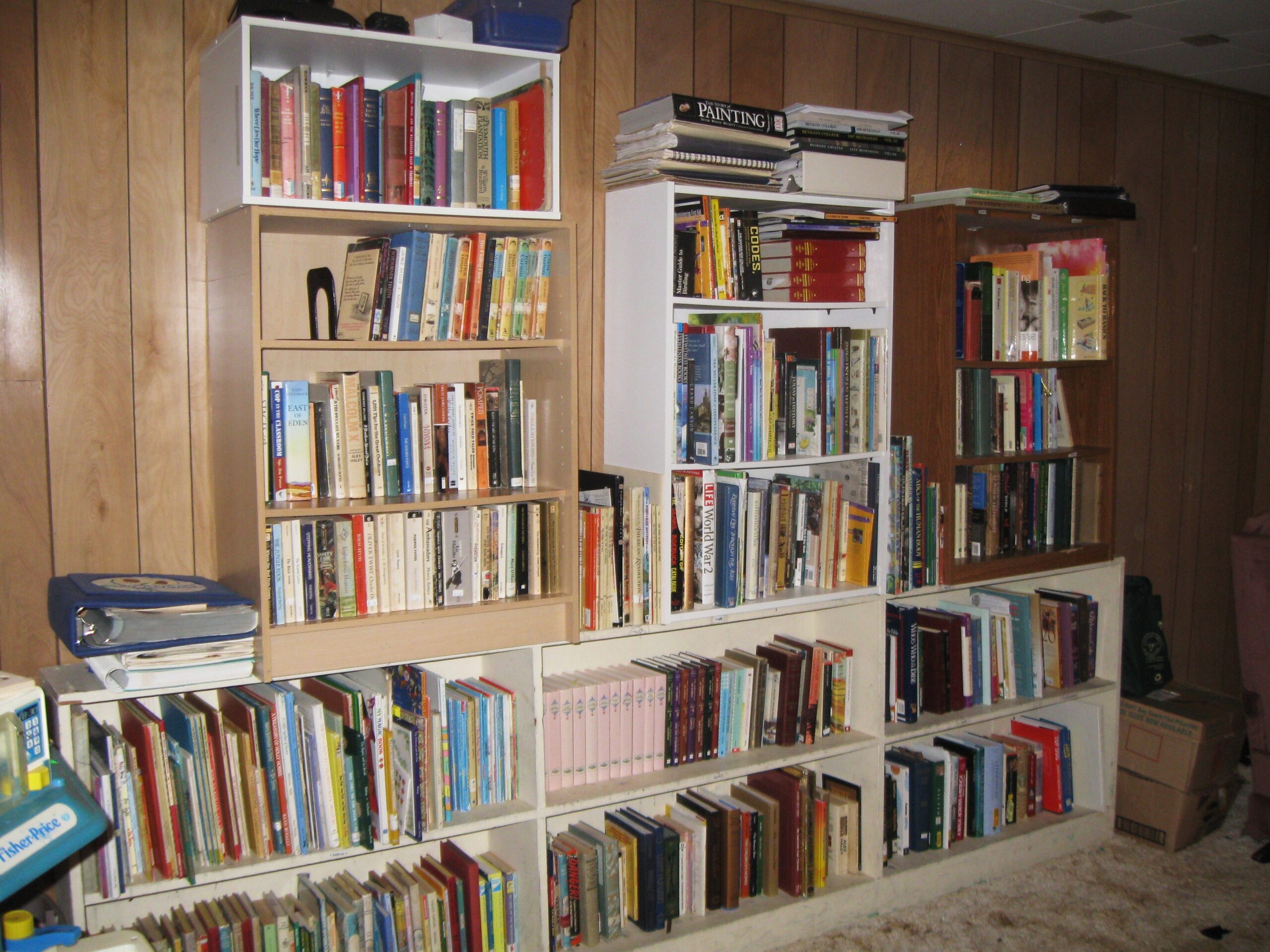
My first suggestion, if you are even the least bit queasy about teaching phonics at all, is to buy some sort of phonics program. We used to use Teach Your Child to Read in 100 Easy Lessons, but I began to notice some things with this curriculum that made me cringe. One is all the extra phonetic markings they use that do not exist in the real world. While I understand the WHY behind this (and they do remove those markings eventually), I was finding my children were not translating what they were learning in the book to their every day world because those markings do not exist in the every day world. I do, however, highly recommend this program if you have a child who is struggling with being a fluid reader.
With my first child, I used a simple McGuffey Reader. It is unscripted and allows you, as the teacher, to stress the things you want to stress and go at a pace you want to go at. This worked great when I was only homeschooling one, but I found as I added more to the household, I was in need of something more structured.
This past year, we invested in Veritas Press’ Phonics Museum. This was one of those purchases that every homeschool mom needs from time to time…the curriculum that brings peace of mind. I have done a full review of the curriculum HERE.
Of course, there are many, many other phonics programs out there, but since these are the only ones I’ve used, I do not feel qualified to speak on any of the others. The goal here is to provide for them phonetic foundation.
Once you have that foundation, the possibilities are limitless, but since this post has gotten rather lengthy, I’ll leave those possibilities for another day…
And, if you would be so kind, please leave what phonics curriculum you use and your own pros and cons list in the comments section. We can all learn from each other that way!
Looking for all the Lifestyle of Learning posts? Start Here!
Nicole from lake view, ny says
We use teach your child to read in 100 easy lessons! So far my daughter is on lesson 63 so we haven’t finished yet..but so far we love it! For Christmas I bought her the BOB readers so she can have books to read to her siblings.
Within the past 10 or so lessons, I’ve noticed she is spelling by sounding out her letters…very cool!
Anita says
Nicole we are using this one too and my boy is sounding out things he wants to write too! It’s so exciting to see!
Amy I had the same concern about the markings, but I am keeping on, hoping that we can smooth that over… i guess I’ll see! I have certainly learnt a few things while using 100 easy lessons.. a few things I was doing wrong or could have been doing better in how I was teaching him… And they had some great tips in the introduction that have helped me with how to go about teaching him how to read too.
Clara says
My daughter had a thirst for learning from when she was tiny – by the time she was 18 months old she could recognise and name all the letters of the alphabet. From there I taught her “A, ? for apple” and so on – teaching both the letter name and the phonetic pronunciation. Next I introduced her to a set of books we have here in Australia (although they originate in UK) that introduced short vowel sounds through a fun story for each (Pat and Pals, read about it here: http://www.patandpals.com/character_pat_inside.asp). From there she just seemed to learn on her own within a matter of days and weeks and the next thing we moved to was the Bible (KJV). We started at Genesis and I wrote out the words she didn’t know on little slips of paper and put them all in her own little ziploc bag – she would pull them out and read them at all different times of the day and night. So by the time she was 4 years old, she could read most words in Genesis 1 and it’s only gotten better and more fluent since! So, sometimes I think making up your own programme as you go can work well (depending on your child)… I hardly spent any money at all on it – which was obviously easy for me to do because I don’t have a lot of children (yet) and could spend time making my own things.
For my son, he picked up some from my lessons with his sister, and some from the phonics books I mentioned above, and then I used “Alpha-Phonics: A Primer for Beginning Readers” which is available at Christianbook.com. I really like the way that primer builds words, but we only got about 1/4 way through that book before he began reading almost any word he wanted to… And for some reason I never bothered finishing the Primer… hmm… I’d even forgotten about it till now!! LOL.
I’m not sure my experience is much use/help, but there you have it!
Natalie @ Naddy's Blog says
We have the Veritas Press Phonics Museum (yay for hand me down curriculum!) and I’ve looked through it. It seems a little intimidating (or maybe that’s just me being intimidated by teaching, period, this is my first! 😉 ) but I am planning on jumping in next year unless he shows interest before that. 🙂 Thanks for comparing some different options!
Amanda says
For my son, the oldest, I’ve used Saxon Phonics since he was 4 and he’s going to be turning 6 in a few weeks and is halfway through the 1st grade book now! He is an amazing learner! He still pauses and is guilty of guessing when he should be sounding out, but if I get on to him he definately knows what he’s doing! My oldest daughter, 3, however is not so quick to pick it up and I’m just giving her a little more time and hoping she just not ready yet. I’ve been using some printable worksheets from kidzone.com, because she is just not ready to build like Saxon does. I have used 100 easy lessons on her, but also agree that I did not like the “coding” they used, because I want to switch her over to Saxon later and was afraid that would be a hard transition.
Jennifer says
We have used for years Phonics Pathways. It was recommended by Susan Wise Bauer as a great resource for moms homeschooling many children. I will soon be having number 7 with my oldest being 13 so I qualify for that! PP takes just a few minutes a day, is just straight, easy phonics. I intersperse it with other more “colorful” things, but PP has been a great springboard. One of the things I was frustrated with when teaching my oldest is that some phonics programs rely alot on the child’s writing skills as well. My oldest was so ready mentally to read, but not ready with his motor skills to write. PP allows you to teach them to read, and begin reading words quickly, no matter where their motor skills are at.
Celee says
I’ve used 100 easy lessons to teach my 4 oldest children to read. It worked like a charm with three of them, but not so well with one of them. I think the “extra markings” are no problem when you’re diligent to finish the program. By the time we were half-way through with my third child, she was starting Kindergarten, so we dropped 100 easy lessons. I regret that now. Since 100 easy lessons gradually phases out the phonetic markings, I think it confused her. She still struggles with ea, oa, etc. As long as I’ve finished the program with the child, it has worked well for us. I love that it only takes a few minutes each day.
Also, I have loved Five in a Row. It’s not that I couldn’t find good books to read to my little ones before, but I love having the accountability to read great books to my pre-schooler. I need that now that I’m focused on his older siblings homeschooling. I also like her ideas on lessons that can be drawn from each book. And by the time I’ve read the book 3 or 4 times in a row to my child, he really knows it.
Celee
Jenny K T says
I got my kids started with some little books my mom kept from when I learned to read. They are the look-say method (please don’t gasp!)I like that the kids feel confident that they can “read” books right away with those. They have sentences like: I am Sam. See Sam. See Mat. It is a series of 50 books, so they get more complicated and use lots of review. I even have some old worksheets you can use orally with the kids to review sounds, letters, and words.
For my first three kids I then used Bob Jones (I was given their K5 program) and loved Mr. and Mrs. Short and Uncle Short(for short vowel words) as well as Miss Silent, Miss Long, and Marker E for teaching phonics. My 16 year old still fondly remembers the stories about the different characters.
With #4 child I tried AlphaPhonics, but we found it uninspiring. There was no fun and it required alot of time from me. Then we did Adventures in Phonics workbooks by Christian Liberty Press. They were thorough and effective, but my son got tired of all the writing on workbook pages. Still, it was an excellent program.
I’m not sure what I’ll do for #5 – he is almost 4. I know I’ll do the little books, and I’m thinking nostalgically about the Bob Jones characters and considering that. Unfortunately, at least when I used it you couldn’t just get the phonics separately.
Stacy says
I am using The Ordinary Parents guide to teaching reading. I used it as a remedial tool when I taught public school before I had kids. It is very straight forward and designed to go at your child’s pace.
Heather says
We’ve used good ol’ A Beka phonics. I’ve had a child who was ‘ahead’ and a child with pretty severe delays, and A Beka got them both reading very quickly! I’ve recently branched away from their full curriculum, but I think I’ll stay with their phonics for my next 4 kids!
Sarah Painter says
I use/used Ordinary Parents Guide to Reading and Explode the Code at the same time. I have eager children who like to do written work so they feel like they are ‘doing’ school.
So far so good. I’m not one to switch curriculum unless there is a problem.
read-phonics says
As a Tutor and homeschool workshop leader, I use Ring Around The Phonics. It is a board game, and uses static cling letters to teach English and Spanish phonics, blends, words and comprehension.
Pors: (1) The static cling letters make it so versatile that one can teach more than one child at different levels and subjects at one time.
(2) children beg to play it, and it takes the stress out of teaching phonics.
Cons: It is not something the child does independently of a parent or child who can read.
Suanna says
With my first he was ready to read and we used McGuffy’s Primer from the Library. He was reading very well in 6 weeks (his pace at age 4 almost 5). With my second she wanted to learn to read and we tried the McGuffy’s Primer, but she wasn’t getting it. I found the Ordinary Parents Guide to Reading and we have been using that, she finished lesson 85 and is doing well beginning to read the books she picks up without much help. They learned the letter sounds early in life so beginning reading usually comes along nicely, when they first start. I like the Ordinary Parents Guide because it teaches the phonics rules which I use repeatedly to help her remember how the word should sound. It also give the exceptions. I don’t have enough enough experience with other programs to know whether I have any cons about these reading lessons. I think it’s important to be aware that my children may learn differently and what works for one may not work for another. If that seems to be the case I would need to look for something that would work for the child who needs it.
Jenna says
I used 100 EZ lessons with my oldest (now 7) when she was beginning to read. It was a struggle, liek pulling teeth, but I was determined to follow the program and it did help her begin to read but she hated it and I hated it, so we stopped around lesson 70. On a happy note, I was stressed that she wasn’t reading well enough, but I decided to just “give it a year” and I back off, took the pressure off, and a year later she was enjoying reading and doing much better. She just wasn’t ready. Now she uses Horizons Phonics (first grade) and we love it! The lessons are short (most days) and in small enough steps that we don’t get overwhelmed with too much new info at once. We also like the colorful workbook pages. My youngest (age 4) BEGGED me at age three to teach him to read. I thought that was ridiculous since my oldest wasn’t ready til age 6, but I humored him and lo and behold he took off! I started with 100 EZ lessons with him, too. Unlike my daughter, he WANTED to learn to read but didn’t like the simple stories in the 100 EZ lessons, so again we ended up dithing that around lesson 60. Now I just have him do random simple reading now and then when he feels like it or takes an interest in something. I have order Horizons kindergarten phonics for him as a Christmas gift, but I plan to let him work on it at his own pace. He is only 4, afterall! I went ahead and got it for him though because many times when I am working with his sister he will get upset if I don’t have school work for him to work on, so I figured if he wanted the work, I might as well provide him with something to do!
cami says
over the past 7 years i have aquired and used bits and pieces of many phonics programs!
I started with Sing Spell Read Write pre-k (SSRW) when my dd was 4-no regrets there and i still use the songs and chart sometimes with my younger children- definately a quick way to learn the alphabet and sounds! Then I tried alpha phonics- basic but not enough for us. Next was sonlight la/phonics- stuck with it but my dd was not ready to write so the extra slow pace we took really held her up. and now that i’ve seen more i think there are more exciting books to be using to read with! We also used abeka phonics, for a workbook its good and the blue book is great for basic practicing of words and the story books were ok. with my next dd we started with 100ez lessons- im glad we worked in this even though we only went through 25 lessons- it was good for me to learn how to help with sounding out words and the moving the ball concept has been applied to other readers ect. cons is that it again is boring after a point and i found something better! Next i found hooked on phonics HOP levels k-2 for 30.00. for the 30+ books alone i figured it was worth the price. I also purchased levels k-1 SSRW at the same time and we borrowed the tad learn to read videos from the library.
I found with 6 children in the home i need something simple and quick that really works…
for us that has been the SSRW songs cd and raceway book 1st grade (primarily for the charts to learn letter sounds), Then the perfect program has been the HOP
pros: after letter sounds are learned (elsewhere) its simple and motivating to read through lists of words for the prize of reaching a short story. I photocopied the short stories and my dd colored, cut and glued them to make her own construction paper books. The stories actually make sense! then after some more lists the child reaches the actual book to read(about 16 in the k level and 8 in level 1). The books all make sense and are fun to read. the included letter cards are good for hands on spelling of words.
cons: no writing/ spelling included. the cd is boring for us- we never use that part of the program.
For writing we have used primary phonics- and so far really like it. so 5 nights a week i spend 20 minutes with my daughter before bed(1-1 time). she reads to me a page or 2 then i read a story to her. we keep it fun and positive at her pace. in 1 year she has finished levels k and 1.
i am still drawn to all the fun of SSRW but its just too much time for me and we never get to it( but it is another good program and includes the writing. If i had not found the great deal on HOP than SSRW would have worked too.
Carmen says
Amy, I agree with your points on the curriculum. We also use 100 Lessons to Read although my children moved well through out the book with no problems with the marks being their and then disappearing. But, I have only put 2 through the book and I have 2 more to go so we will see.
I use Veritas Press K and 1st grade. I really like it because it is the ONLY book work type activity that we have in this house. It teaches to sit a little more formally. I find it is a good thing when paired with the 100 Lessons to Read book. I personally do not think it should be a stand alone curriculum until after a child reads already. We do use the some of the readers that come with it. I use the workbook. I use the puzzles letters to make words. We use the flash cards too. I do not used the museum activity board and act like we are in a museum and read the story. I skip this! I often have pictures on my site of the kiddos doing “Veritas Workbook”.
Crystal says
I started kindergarten this year with my 5yo son. We started with the Veritas Press Musuem, but have moved on to using the Ordinary Parents Guide, Explode the Code, and then I’ve now been looking at other things. There’s been great things about each, but my son just doesn’t seem to be getting “it.” I’m not sure what to do. He really hates all of it now. My plan for after our Christmas break is to use the lessons from thephonicspage.org and “Noah Webster’s syllabary”. I remember learning the syllabary when I was learning to read. My mom would drill me on it daily until I got each ladder. Neway- I will have to see how it goes. I recognize that he may just not be ready, but I also feel that all the things I’ve tried have skipped this important step of “syllabary” (being able to blend just two letters) before moving on to three letter words.
Amy says
My beginning reader is 6. We tried when she was 5 and she wasn’t retaining a thing. So, I stopped. When I picked back up this fall after she turned 6, she retained the information much better! Amazing what a few months can do! If you continue to find he isn’t advancing, give it a rest for a few months. Then jump into whatever program you decide upon with both feet and give it a good go for at least 2 months before deciding it isn’t the right program for you. Sometimes all we need is consistency. 🙂
Ginger says
So glad you said that about 100 EZ Lessons. It didn’t work at all for my 2 bio girls. Did all 100 lessons and the entire appendix and they were still writing diacritical marking in their letters to grandma, but not reading fluently. Ugh!
But I think it’s exactly what my Liberian adoptees need.
With “normal” children, I really don’t think it matters what curriculum you use; it matters when you start using it. If a child is developmentally ready, any good curricula will work. If they’re not, nothing will, no matter how good.
Mollie Rowe says
I use/used Ordinary Parents Guide to Reading and Explode the Code at the same time. I have eager children who like to do written work so they feel like they are ‘doing’ school. So far so good. I’m not one to switch curriculum unless there is a problem.
read-phonics says
since the last time I visited, the article has been reduced in size making it difficult to read.
Amy says
The blog was down for a few hours which is why it looked odd. Things are back to normal now. 🙂
read-phonics says
looks good..thanks for the quick response
Beth says
My first basically taught herself to read, with me only telling her what sounds some of the letters made.
With my second, we used Explode the Code last year, and it went really well. He sped through the first two workbooks. This year we switched to the Sonlight Language Arts program, but I don’t really love it, and he wasn’t liking it either. So I just bought the third Explode the Code book for him to work through.
zuramy says
I have to stop and said tha is wonderful your page and I am glad to finally find some one no willing to teach kids mythology characters and tale but trainned them with the bible instead , telling them the WHY behind and the the different between tradition and bible commentments . I been homeschooling for only two years and this is the first mom I heard to say same point of view tham mine ….thank you I will keep reading you log often ….
Jessica Moore says
I’ve been wondering about Phonics Museum, so glad you took the time to explain what you love about it! Thanks!
Here’s what we’ve done so far and what’s worked:
I did 100 Easy Lessons. Was like pulling teeth. My son hated it and so did I. We only lasted about 30 lessons, and then we started back tracking, doing some of the lessons over trying to get him ready to move on. Never happened…
Now we are doing Hooked on Phonics. MUCH better. We are doing the main book plus the work books that are purchased separately for about $7 each. They are colorful and interactive.
We only spend about 15 minutes a day on it and we both enjoy it.
The reason I’m curious about Phonics Museum is the focus on true history and Bible stories. I love incorporating more where I can.
Thanks again!
Jessica
Amy says
Jessica,
The main emphasis is art. They add in true history and Bible as well. However, there was the myth book at the beginning that we skipped. However, I’d say if Hooked on Phonics is working for you, don’t bother reinventing the wheel. Learning to read is the goal and whatever gets you there is good enough. 🙂
Jessica Moore says
Thanks so much for the reply, Amy! That’s exactly what I needed to know. Since I can’t see it in person, I needed someone to tell me if it was worth changing what we’re doing 🙂